In August 2024, the Saudi Council of Ministers changed labor law and created new working hours in Saudi Arabia. These changes are meant to make the work environment better and help achieve the goals of Saudi Vision 2030. Vision 2030 wants to make Saudi Arabia a vibrant society, a thriving economical state, plus an ambitious nation. Developed by the Council of Economic and Development Affairs under the supervision of Deputy Crown Prince Mohammed bin Salman.
KSA works under strict regulations and legal framework related to Saudi labor law working hours. For example, they have clearly declared new working hours in Saudi Arabia for all the employees and if they do more duty, it’s then counted as overtime work. The Saudi Arabia labor salary law binds them to pay employees overtime. No employer can make its workforce perform more than 8 hrs/day and 48 hrs/week without paying overtime.
Besides these new working hours in Saudi Arabia, their labor laws also protect their rights strictly in other aspects like employment contracts, wages, termination procedures, and anti-discrimination measures. This blog will tell you about every new reform about working hours in Saudi Arabia.
Read: How to Set Up a Business in Saudi Arabia? Govt Guidelines

Overtime Law
If someone works beyond standard hours, it’s considered overtime. This is valid for both daily and weekly working hours. Any employee that does that, can ask for overtime pay and it must be paid at 150% of the regular rate. There is no set minimum wage for workers. Wages are typically decided through discussions between employers and employees or are based on industry standards. Workers receive an extra amount equal to their regular hourly wage plus 50% of their base wage. Employees can refuse unreasonable overtime requests, however. Either case, employers are required to maintain clear records of overtime hours.
How to Calculate Overtime in KSA?
Although there is a longer formula people generally use to calculate overtime in KSA, you can use this simplified formula to calculate overtime pay in one go.
Total Overtime Pay = [Base Salary/(Working Days per Month×Working Hours per Day) x 1.5] x Overtime Hours.
Rest and Break Law
Employees can take a break unapologetically after five consecutive working hours for at least 30 minutes. They can have lunch during that break, pray and do other preferred activities. And nobody can ask them to remain at their seats or be responsible for the work in these break hours. Employees should work no more than 12 hours in a day, including breaks. They must also have a rest day of at least 24 consecutive hours each week. Also in Saudi Arabia, Friday is the weekly rest day, but employers can choose to have a different rest day by informing the company. There are no specific rules about working on weekends.
Night Shift and Weekend Law
In November 2019, the Ministry of Labor and Social Development in Saudi Arabia made a new rule that started in January 2020. This rule is about working at night and the rights of people who work at night. Working at night means working between 11 at night and 6 in the morning. The rule says that workers must have at least 12 hours of rest between their night shifts. Also, workers cannot work at night for more than three months in a row. Employers must change workers between working during the day and working at night every three months, unless the worker writes that they agree to something else. Employers must cover transportation costs for night shifts. And they can’t ask those with risky medical conditions for night work.
Deductions and Withholdings Law
Employees’ pay can be reduced for taxes, social security, and other approved reasons. However, any deductions that are not agreed to by the employee, that bring wages below the legal limit, or that are unrelated to employment are not permitted. For those who want to know the end of service benefits in Saudi Arabia, note that employees who complete two years of service are entitled to a bonus on how long they worked and their final salary. The company must pay this bonus within the period specified by Saudi Arabia labor salary law when the employee leaves the job.
Annual Leaves and Holidays Law
Saudi Labor Law (Royal Decree No. M/51) declares that employees will get enough time off, like annual leave and public holidays. The law also says that employees earn annual leave after working for one year without a break. The longer you work, the more leave you can get, up to a maximum of 30 days per year. In Saudi Arabia, employees get 21 days off each year. They also get paid time off for holidays and if they are sick.
Child Labor Law
The Ministry of Human Resources and Social Development looks after child labor laws in Saudi Arabia. The Royal Decree law No. M/51. has banned working of children under 15. In this regard they have followed the International Labor Organization standards. Furthermore, they don’t allow under 18 individuals to work in hazardous jobs that could be dangerous. Anything that endangers minors’ health, safety, or moral development is banned in Saudi Arabia. But they can do internships, apprenticeships and vocational training as long as they don’t interfere with their health. If minors work, they must be given enough time from their workplaces so that they can rest properly and invest good time in their education, according to the new working hours in Saudi Arabia.
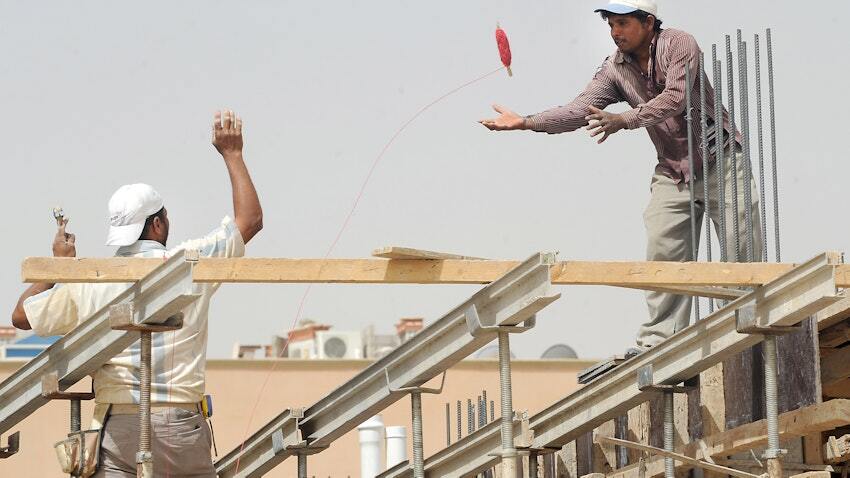
Difference Between Labor Laws for Saudis and Non-Saudis
Saudi Arabia’s new employment rules say that people from other countries who want to work there are bound to follow some regulations. This is to make sure that there are enough jobs for people from Saudi Arabia and to meet the needs of workers from other countries.
Criteria
|
Saudi Workers
|
Non-Saudi Workers
|
| Minimum Age Requirement |
Minimum age: 21 for men, 22 for women. Minors (15+) may work under Article 10 rule. |
Same minimum age requirement applies (21 for men, 22 for women). Minors (15+) can also be employed. |
| Dress Code |
Women must follow a specific dress code at official work sites. |
Foreign women are also asked to follow the same dress code at official work sites. |
| Type of Employment Contracts |
Eligible for open-ended contracts. |
Limited to fixed-term contracts, which may be renewed or changed to open-ended. |
| Additional Procedures |
No additional procedures needed for employment. |
Must take permission from ministry, have a valid work permit, and hold a passport valid for at least six months. |
| Professional Skills Requirement |
No specific skill requirements tied to nationality. It means they can work in any field for which they qualify. |
Must have professional skills that are not available among Saudi citizens or the existing workforce (Article 33). It means that they will be labeled as necessary workers for the country, depending on skills. |
Saudi Labor Law’s Employment Contract
While the Saudi Arabian government ensures the rights of employees, they also make sure that employers don’t get spoiled in this race. Their overall approach is to make sure both employers and employees work together with fairness and legal compliance in a positive work environment. They have made article 50 in the Saudi Labor Law that binds employees to work under the employer’s direction for a wage. However, with mutual understanding between the organization and its employees the terms in this contract can be changed.
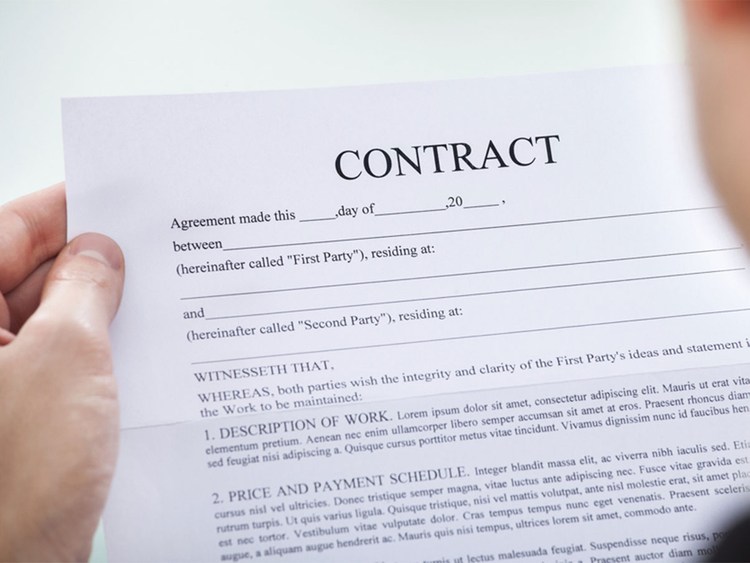
Requirements of Article 50 in the Saudi Labor Law
The following requirements for employment contracts under Article 50. Saudi Labor Laws can change, so it’s best to consult legal experts to make sure your employment contracts comply with the latest regulations. Currently these are the laws that employees and employers need to meet.
- The employment contract should show job details, salary, work hours, trial period, benefits, and termination terms.
- Contracts need to clearly tell whether they are fixed or ongoing. For a fixed period, specify the length and the terms for renewing it.
- Acontract must clearly mention the salary, allowances, bonuses, and overtime pay if applicable.
- The contract should clearly tell you about regular working hours, offs, and overtime rules in detail.
- Your contract must explain the Saudi labor law – termination of contract and resignation, and how much notice is needed and what are the end of service benefits in Saudi Arabia.
- The contract must show information about annual leave, sick leave, maternity leave, and other rights as per Saudi Labor Law.
- The contract must include details about workplace safety, creating a good work environment, and complying with labor laws.
- Finally, during the first 90 days, either party can end the contract without notice. This must be stated in the contract.
Read: Guide: What is Commercial Registration Number in Saudi Arabia?
How to Create an Employment Contract?
According to Ministry of Human Resources and Social Development you need
- Company’s name and location.
- Company’s name, nationality, proof of identity, and address.
- Agreed salary, bonuses, benefits and allowances.
- Job description, job location, and date of starting it.
- Duration of contract for non-Saudi employees.
Article 52 allows you to add extra terms to the contract as long as they don’t break the law. Both employers and employees should get a copy of the contract. Even if it’s not written down, the contract is still valid. The employee can prove that the contract exists and their rights through different forms of evidence. Just ask for a hard copy of the contract at any time. For government employees, an appointment order or decision serves as the contract as per Article 51.
Penalty for Breaking Employment Contract in Saudi Arabia
Whenever an employer ends a work contract, he is obligated to compensate the employee in a reasonable way. Although some contracts are made with no set end date, employers are obligated to give compensation. According to Saudi Arabia labor salary law, they must be provided wage for either fifteen days or two months’ wages for each year the individual has worked.
Conclusion
The new labor laws are clear about everything from hiring people to making contracts to managing them to letting them go on vacations to the specific steps for resigning. The process for handling worker complaints has been updated as well. Plus there are now penalties for hiring workers without a proper license. Employers are required to create training policies to help employees improve their skills, according to Saudi Arabia’s new employment rules.
FAQs
1. What is Saudi Labor Law?
Saudi Labor Law is the legal framework that regulates the relationship between employers and employees in Saudi Arabia. It covers working hours, overtime, wages, employment contracts, annual leave, termination, end-of-service benefits, rest periods, child labor rules, and employee rights.
2. What are the standard working hours in Saudi Arabia?
The standard working hours in Saudi Arabia are generally 8 hours per day or 48 hours per week. During Ramadan, working hours are reduced for Muslim employees to 6 hours per day or 36 hours per week. Any work beyond the allowed hours may be treated as overtime.
3. How is overtime calculated in Saudi Arabia?
Overtime in Saudi Arabia is calculated by paying the employee their normal hourly wage plus an additional 50% of the basic hourly wage. A simple way to calculate overtime is to divide the base salary by the normal monthly working hours, multiply it by 1.5, and then multiply it by the number of overtime hours worked.
4. Are employees entitled to breaks during working hours?
Yes, employees are entitled to rest breaks during working hours. Workers should not work for more than five consecutive hours without a break for rest, prayer, or meals. These breaks are not usually counted as working hours, and employees should not be required to remain under the employer’s control during that time.
5. What is the weekly rest day in Saudi Arabia?
Friday is generally considered the weekly rest day in Saudi Arabia. However, an employer may replace Friday with another rest day in certain cases, depending on the nature of the work and legal requirements. Employees should receive at least one full weekly rest day.
6. How many annual leave days do employees get in Saudi Arabia?
Employees in Saudi Arabia are generally entitled to at least 21 days of paid annual leave. This increases to at least 30 days if the employee has completed five consecutive years of service with the same employer. Annual leave should be paid and arranged according to labor law rules and business requirements.
7. What should be included in a Saudi employment contract?
A Saudi employment contract should include the employee’s job title, salary, benefits, allowances, work location, working hours, start date, contract duration, probation period, leave entitlement, overtime rules, termination terms, and end-of-service benefits. For non-Saudi employees, the contract duration should also be clearly mentioned.
8. What are end-of-service benefits in Saudi Arabia?
End-of-service benefits are payments given to eligible employees when their employment ends. The amount usually depends on the employee’s length of service, final wage, and reason for leaving. These benefits are an important part of Saudi Labor Law and should be calculated carefully according to the employee’s contract and legal entitlement.