The Internet tracks user behavior. Allowing cookies on websites is one example of it. There are different digital marketing strategies used for this purpose. For example, cross-device monitoring is a digital marketing strategy that constantly tracks user behavior on the internet. In this blog, we won’t cover strategies that track users, but we will surely tell you the best one marketers use to track user behavior today.
Retargeting Tracks Users Across The Web
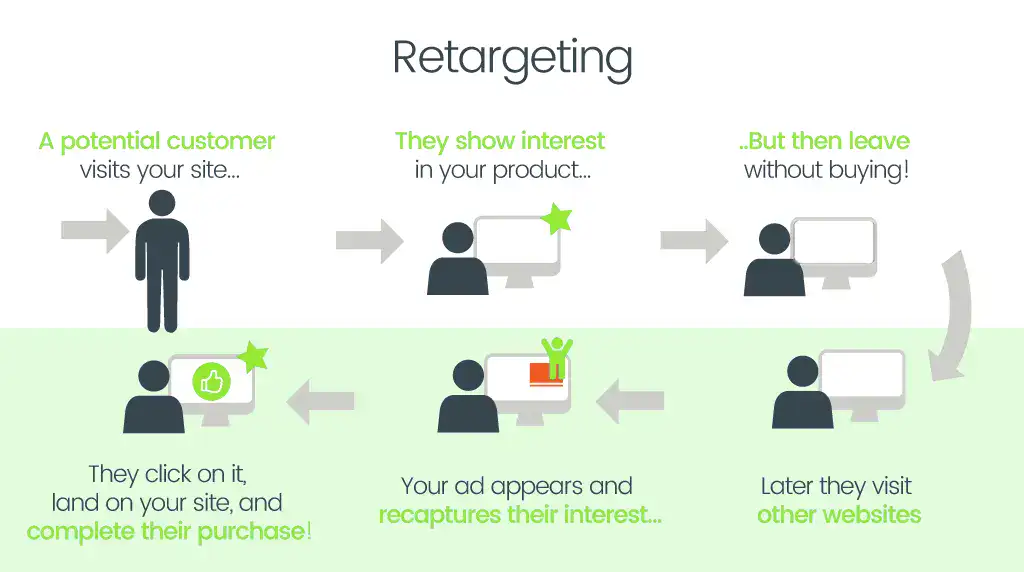
Retargeting is a marketing method that helps to reach people who have already visited your website. It shows them ads when they are browsing other websites or apps like Facebook, TikTok or Instagram. You can do that by placing a small piece of code, called a tracking pixel, on your site. After that, when someone visits your site, this code creates a cookie in their web browser. It tracks their behavior online like things they search and where they spend the most time on browsing. This process helps marketers show specific ads to people based on their interests.
Concerns Related to Privacy Laws
When trying to show ads to people based on their past activities, businesses must follow privacy laws. There are popular European laws related to it such as General Data Protection Regulation (GDPR). There are American laws, such as that one in California, known as Consumer Privacy Act (CCPA). Such laws protect personal information and set a boundary on how companies can collect and use people’s data.
These laws further shape how websites track cookies and gather user information online. Websites should contain a document that explains about their retargeting activities. Mention in it how you collect their data and how you use it. Not only that, users at your website must have an option to opt out from being tracked such as rejecting all cookies and similar stuff.
Advantages of User-Tracking Digital Marketing Strategies

Attractive User Experience
They foster user engagement and experience as they get to see more relevant content. This results in higher conversion rates.
Increased Conversions
Retargeting brings users back to your site and increases conversions by reminding them of your business by showing ads repeatedly on a pattern.
Nurture Leads and Build Brand Awareness
Retargeting engages people with targeted ads to keep their interest alive and make them purchase again in the future.
Personalized and Relevant Ads
Retargeting only shows those ads to people in which they are really interested in. They won’t show a man some children’s toys ads.
Cost-Effective Marketing
Retargeting is a cost-effective strategy because you only pay for ads when some user clicks on them, so that you can avoid wasting money on ads.
Improved Campaign Flexibility
Retargeting can be used with email campaigns and SEO as well. You show ads to people who opened your emails in the past, and to those who have already visited your website.
Other Important Strategies to Help Improve Your Business
Now that you know what is the digital marketing strategy that tracks users across the web, we will tell you some other methods to take your business to the next level in 2026.

Understand Who Your Real Audience Is
You can’t increase your reach to your customers if you don’t know who they are. So find them. Find out your ideal audience. Find out their preferences, pain points, demographics and everything else. The more information, the better.
Your Online Presence Must be Professional
Your website can’t build success if it’s not fast enough. Users don’t wait forever for your site to load completely. They leave. So get a fast loading website with clear brand communication content, and impactful CTAs for engagement.
Implement Right SEO Strategies
You need to keep optimizing content because it isn’t one time process. Optimize everything related to SEO be it structure, technical elements, keywords, meta tags, pictures, backlinks or everything else. You can consult SEO experts at First Growth Agency to get help with this.
Read: What Are Three Key Considerations When Evaluating Keywords For Search Engine Optimisation?
Use Pay-Per-Click (PPC) Marketing
Your website must show paid ads to the right audience, otherwise your money goes in vain. As we said earlier, find your target audience. Then use platforms like Google Ads and Meta Ads to target specific audiences with eye-catching ads.
Read: What Is PPC? Learn the Basics of Pay Per Click Marketing in 2026
Integrate Cross-Web User Tracking
You need to track user behavior on different platforms to understand the user journey. It helps you tweak your ads and content for better. Use timeline makers and templates to visualize interactions, and then optimize your strategy accordingly.
Create Presence on Right Social Platforms
Your audience must get all the information related to you on your social handles, and website. Besides that, make sure you post something on a daily basis that engages users. It should be attractive enough for them to comment on, like and share.
Read: Which Social Media Platforms Are Best For My Business?
Run an Email Marketing Campaign
You need to make a segmented list, offer discounts, and tailor your content when working on email marketing campaigns. And don’t forget to use automation tools in email campaigns for timely messages like cart abandonment reminders.
Read: Email Marketing Trends in 2026 to 2027
Stay Active on Social Sites
Your online reputation is related to your business success and impacts it. So you need to monitor the reviews you get and everything else on social media, and respond back professionally to everything. Don’t ignore anyone as it can lead to potential harm to your newly created brand.
Keep Looking Out for Marketing Trends
You should also know what is going on on social platforms. It’s because the future of digital marketing focuses on personalization. You must understand what people like. For instance, short videos are hot in social media trends. That’s why brands are investing in it.
Read: Facebook Ads vs. Google Ads: Which One is Best
Conclusion
Retargeting boosts sales by showing personalized ads to users who’ve visited your website. We talked in detail about the topic what is the digital marketing strategy that tracks users across the web. In short, by tracking user actions, it improves their overall experience and keeps your brand in the minds of potential customers. If you want to use retargeting and enjoy its benefits, like higher conversion rates, contact First Growth Agency. We can also help you with other digital marketing strategies, such as SEO, PPC, social media, and more, to grow your business in 2026.
FAQs
1. What is the digital marketing strategy that tracks users across the web?
The digital marketing strategy that tracks users across the web is usually called retargeting or remarketing. It allows businesses to show ads to people who have already visited their website, viewed a product, clicked an ad, or interacted with the brand online.
2. How does retargeting work?
Retargeting works by using a tracking pixel, cookie, or similar tracking technology on a website. When a user visits the website, their activity can be added to an audience list. Later, the business can show targeted ads to that user on platforms such as Google, Facebook, Instagram, TikTok, YouTube, or other websites and apps.
3. Why do businesses use retargeting?
Businesses use retargeting because many visitors do not buy, sign up, or contact the company on their first visit. Retargeting helps bring those users back by reminding them of the product, service, or offer they already showed interest in. This can improve conversions, brand recall, and return on ad spend.
4. What is the difference between retargeting and remarketing?
Retargeting usually refers to showing paid ads to users who previously interacted with a website or brand. Remarketing is often used in a similar way, but it can also include re-engaging users through email campaigns, customer lists, or platform-based audience segments. In practice, many marketers use both terms interchangeably.
5. Is retargeting useful for increasing conversions?
Yes, retargeting can be useful for increasing conversions because it focuses on people who already know the brand or have shown interest. These users are often warmer than completely new audiences. By showing relevant ads, offers, reminders, or product messages, businesses can encourage users to return and complete an action.
6. Is retargeting allowed under privacy laws?
Retargeting is allowed in many regions, but businesses must follow privacy laws and platform policies. This usually means informing users about tracking, explaining how their data is used, offering cookie choices, and giving users the option to opt out where required. Laws such as GDPR and CCPA have made consent and transparency more important.
7. What are the benefits of tracking user behavior in digital marketing?
Tracking user behavior helps businesses understand what people view, click, search, abandon, and purchase. This data can improve ad targeting, website experience, audience segmentation, email campaigns, and content strategy. It also helps marketers spend budget more efficiently by focusing on users who are more likely to convert.
8. How can businesses use retargeting effectively?
Businesses can use retargeting effectively by segmenting audiences, showing relevant ads, avoiding excessive ad frequency, using strong calls to action, testing different creatives, and excluding users who already converted. Retargeting should feel helpful and timely, not repetitive or intrusive.